Guide
After a Leak Reaches a Wall or Ceiling: What to Do First
Water that gets into drywall does its real damage in the first day or two, while the board is wet and the cavity behind it is closed, so what you do in those hours decides how much of the wall has to come out later.
Is the ceiling bulging?
If a ceiling is drooping or swollen with water, your very first job is at the electrical panel: turn off the breaker feeding any fixture in the wet section. After that, empty the room underneath, shut the door on children and pets, and set a bucket on a tarp under the lowest point. Wet ceiling board can drop all at once, so leave the draining to a pro.
How do you stop the water?
Find the main shutoff valve before you need it. In most houses it is where the supply line enters the basement. Harford County's Health Department permits private wells, and on a house with a well the valve is usually near the pressure tank; switching off the well pump's breaker stops the pump from refilling the lines.
For water dripping from above in midwinter, the cause is often ice built up along the gutter line rather than plumbing. Raking snow off the bottom of the roof from the ground eases the backup until a roofer can look at it.
What is the fastest way to dry a room?
Move air across the wet surfaces and pull moisture out of the room. Box fans or air movers aimed at the wall, a dehumidifier with the doors shut, and the heat set to a normal room temperature all help. Take wet rugs, books and boxes out of the room.
Pry the baseboard off a wet wall so air can get at the lowest edge of the board, and if the cavity is sealed, bore a few small holes low in the wall where the trim used to cover. The trim hides them once it goes back on.
How can you tell how wet the wall is?
A pin or pinless moisture meter, sold at any hardware store, compares the damp patch against a part of the house that stayed dry. Take readings every foot or so up from the floor and mark where they return to normal. Wet board also feels cool and soft, and paint over it may bubble or peel.
Write the readings down with the date. They help the person quoting the repair, and an insurer may ask for them.
Check again the next day and the day after. Readings that keep falling mean the drying is working; readings that stay high in one spot often point to water still getting in, or to a pocket of wet insulation behind the board that needs to come out.
Which parts of the wall need to come out?
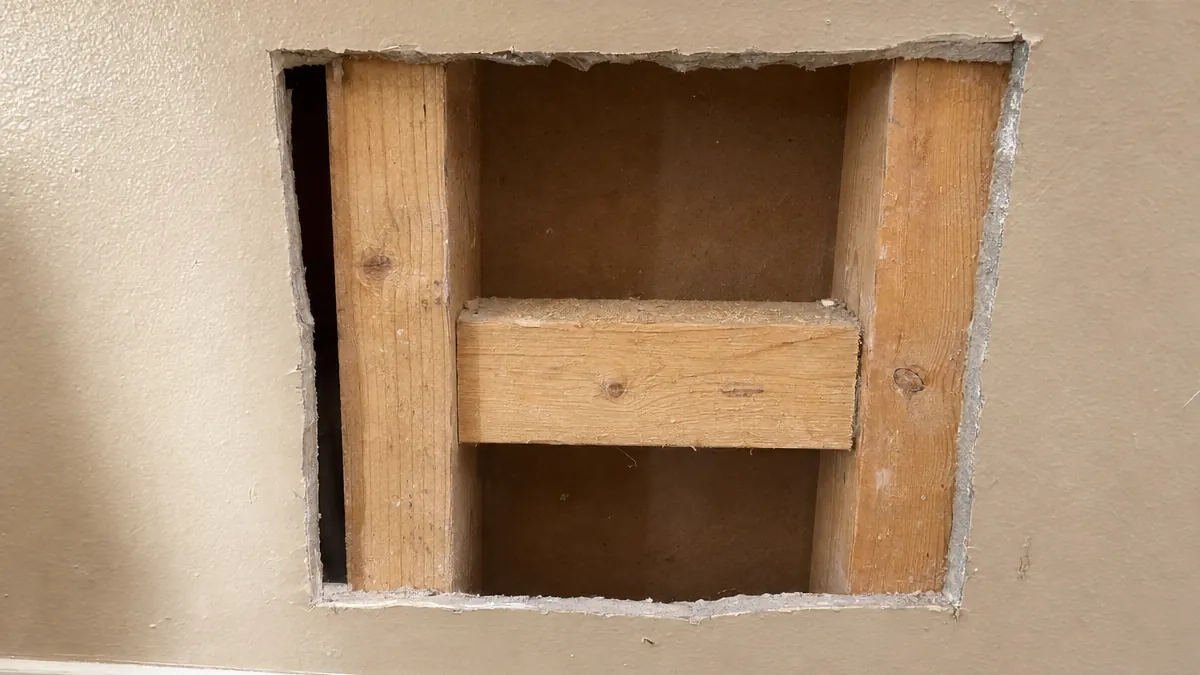
Board that was soaked, has softened, sags between framing, or shows mold on either face should be cut out. Board that got damp and dried firm, with no stain or smell, can often stay and take a coat of sealer made for water marks. Wet insulation behind the board comes out too.
The cut usually runs straight and level, with a margin of a few inches over the last damp reading, so the replacement piece fits cleanly. In a finished basement that cut is the start of the repair described on the basement water damage page. For a ceiling under an attic, the ice dam ceiling repair page covers what follows.
When should you call?
Call once the leak is shut off, even if the room is still drying. A local pro can talk through what the readings and photos show, tell you how long the cavity probably needs, and quote the repair so it is ready to go once the framing is dry.
Other topics are collected on the drywall guides page.