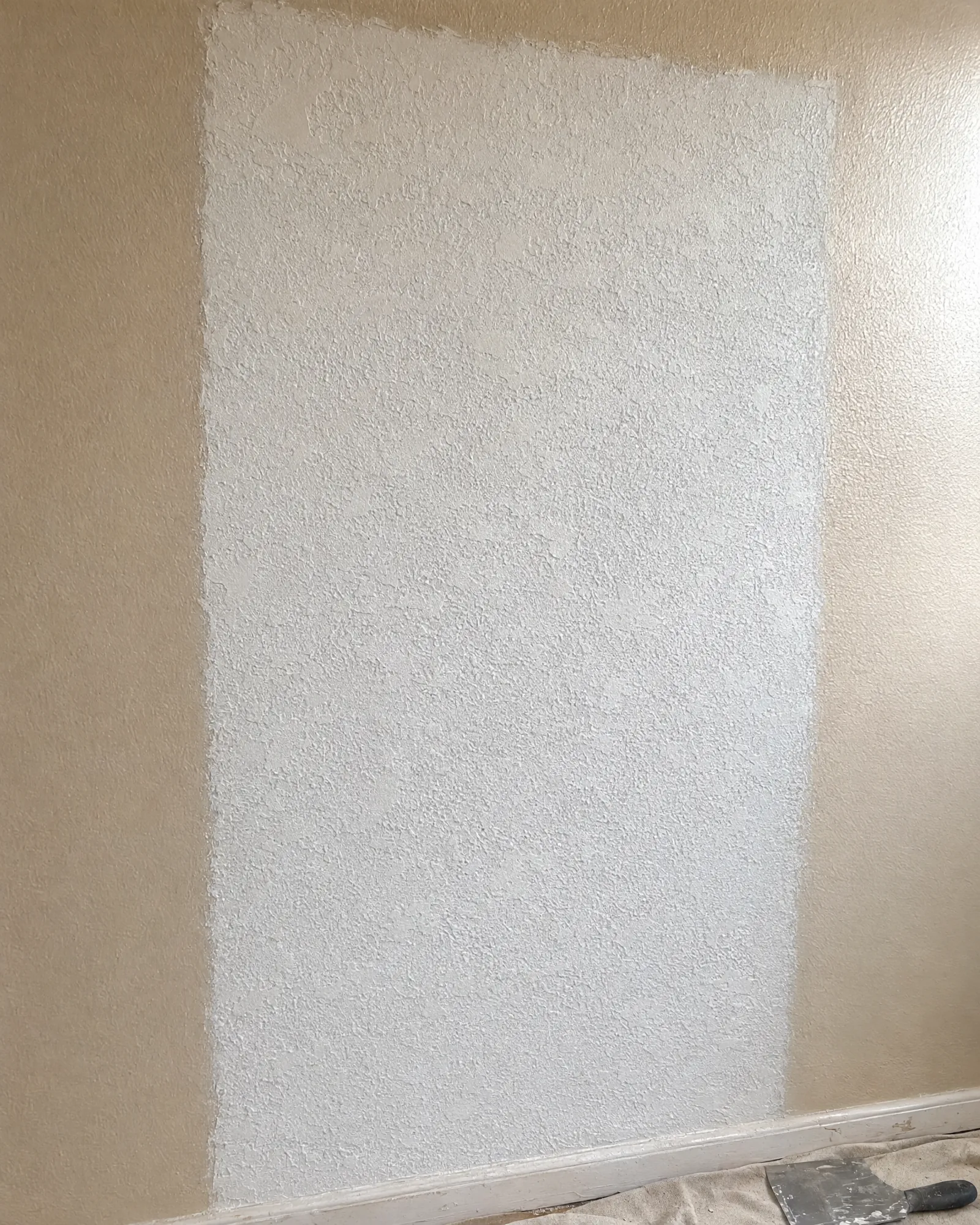
Fallston, Harford County, Maryland
Drywall Repair in Fallston, MD
Popped nails, split joints, finished basements that took on water and upstairs ceilings browned by winter ice dams, rebuilt to sit flush, given back their texture and primed for your color.
One call gets it moving; the drywaller who'd handle it phones back to hear the story and quote the fix.
Call 7 days, 7am–9pm
Putting the house on the market, or handing back the keys?
Fallston counted 3,304 housing units at the 2020 census, and each one that changes hands gets a close look from buyers, appraisers or a landlord walking through with a checklist, which is exactly when small marks on the walls start to cost you.
Sale photographs are unkind to drywall. A camera flash, or late sun raking in at a low angle, throws a shadow off every lifted screw head and every ridge of old joint compound, so a ceiling that looks fine to the people living under it reads as worn in a listing. Before the house is listed or a lease wraps up, fix whatever a stranger's eye lands on: the bracket holes where a wall-mounted TV hung, the round dent a doorknob leaves in a bedroom wall, a crack climbing from the corner of a door frame, and any brown ring that suggests water once got in.
Pinholes from picture hooks are another matter. A painter normally knifes those full as part of the paint job, so booking drywall work for them is wasted money. Put the repair budget toward real damage.
Order matters more than most sellers expect. Fresh compound needs to dry out and be primed before finish paint goes over it, so the drywall work belongs ahead of the painter rather than on the same morning. If a painting date or a closing date is already fixed, say so on the first call and the schedule can be worked out backward from it.
What is that mark on the wall pointing to?
Damage to gypsum board nearly always records its cause in its shape, and reading that shape correctly decides whether a fix holds through the next winter or opens up again by spring.
- A row of little domes spaced along one line, most often overhead
- Nails working loose as the framing they are driven into dries and shrinks. resetting popped fasteners
- A ruler-straight split on a joint, or paper tape curling at its edge
- The framing shifting at a joint, or tape bedded on too little mud when the house was finished. re-taping a cracked joint
- Blisters, soft board or a high-water mark near a basement floor
- Moisture climbing from the slab, or a leak hidden in the wall for a while. finished-basement water repair
- A brown halo on a second-floor ceiling close to the eaves after snow
- Melt backing up beneath the shingles at the eaves and dripping onto the board. fixing a ceiling an ice dam leaked through
- Crushed edges, a broken-in dent or an anchor ripped out
- Impact, from a swinging door, a chair tipped back, or furniture carried up the stairs. patching a hole
Which repair are you after?
Each of the four repairs here has a page of its own laying out why the damage happens, the steps a proper fix takes and the things that push the price up or down.
Bumps on studs, cracks on joints
Backed-out fasteners pulled tight with new screws and failed joints re-taped, so the lines stop reappearing.
Details on nail pop and seam crack repairLower-level walls that got wet
Soaked board removed to a level line, the stud bays dried out, and fresh board hung and finished.
Details on basement water damage repairUpstairs ceilings after a hard winter
Browned or softened ceiling board near the eaves sealed, replaced or re-textured once the roof is dealt with.
Details on ice dam ceiling repairHoles of any size
Anything from a pulled curtain anchor to a hole a moving dolly punched through, backed, taped and blended.
Details on drywall hole patching
Can you name the trouble in a word or two?
Tap whichever description fits best. The estimate form opens with your pick set, and it can be changed there.
How is the rest of the house kept clean while a wall is open?
Sanding dust from joint compound is fine enough to ride the return air of a furnace to every room upstairs, so protecting a house starts at the vents, well before anyone thinks about the floor.
Registers and the furnace fan
Careful work means the heat registers and cold-air intakes in that room get masked off, with the blower shut down while anyone sands. If the damage is near an intake, raise it when the quote is discussed.
Door openings and flooring
A sheet of poly taped across the opening, with a zippered flap to walk through, holds the dust in one room. Canvas belongs on the floor because it stays put underfoot; thin plastic skates around.
Furniture and shelves
Take frames down and empty shelves near the damage before the repair date. Big pieces can be pulled toward the center of the room and draped.
Keeping the dust down
A sander tethered to a dust extractor, with hand-sponging for the final smoothing, keeps most of the powder out of the air. Asking which approach will be used is reasonable.
Heard any of these about fixing walls?
A few beliefs about drywall get passed around at every hardware counter, and each one has led to a repair that had to be done twice.
- Heard Spackle fixes anything small.
- In fact Lightweight spackle suits a nail hole. A crack that opens and closes between summer and winter splits right back through it, because a joint that moves needs tape embedded in compound.
- Heard Once the stain dries, the leak is over.
- In fact A dry ring says only that the dripping paused. An ice dam rebuilds with the next snowfall and thaw, so the roof comes before any ceiling work.
- Heard A nail pop means the house is coming apart.
- In fact Pops usually trace back to lumber shrinking around a nail shank. Setting a screw beside the old nail and sinking the nail head is the normal answer.
- Heard Fresh paint hides a patch.
- In fact Paint exaggerates changes in texture and sheen more than it covers them. A patch needs its texture rebuilt and a primer coat underneath so the topcoat dries evenly.
How does one phone call turn into a repaired wall?
The path from a damaged wall to a mended one is short and plain, and no one touches the wall before you have a figure in hand and have agreed to it.
You describe it
Ring us, or text a picture with something familiar beside the damage, such as a quarter or a light switch cover, so its size is clear.
A pro calls with questions
A drywaller working in the Fallston area rings back about the size, the room, the surface and the cause, and settles on a quoted price with you up front.
Settling on a date
After you agree to the price, the job is scheduled. Wet framing can mean a wait for drying, and that is explained at the start.
The wall is rebuilt
Broken gypsum is removed until only solid board remains around the opening, fresh board is fastened with screws into the studs or joists, and the joints get tape and several coats of compound, sanded between coats and textured to blend.
Set up for your paint
The finished area is smooth or textured like its surroundings, and primed where that was agreed, so your paint goes straight on. Whether painting can be included is worth asking.
What does it run? Each wall is priced on its own, but as a rough guide, Fixr's drywall pricing page (January 2025 revision) lists the usual repair of a drywall hole at about $60 to $200, a nail pop at about $75 to $140, and water damage across one room at roughly $400 to $800. Those figures cover the whole U.S. rather than Fallston alone; the size of the damage, the texture, the ceiling height and any drying time shift the figure most.
Does an older Fallston house need a different kind of repair?
The original village of Fallston sits on Old Fallston Road in the southeast corner of today's census area, near the Little Falls Meetinghouse, built in 1843 to replace an earlier meetinghouse from 1773, so buildings stood here long before gypsum board was an ordinary wall material.
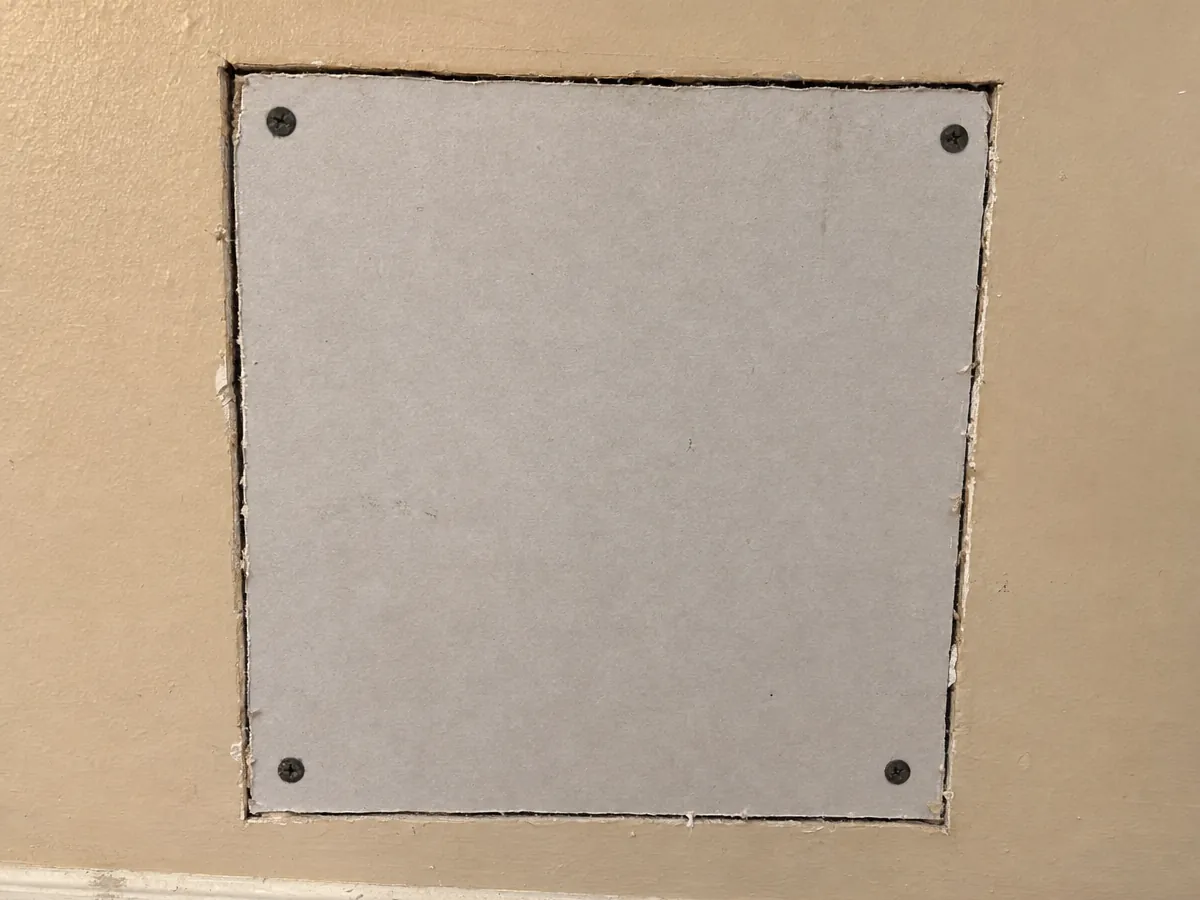
Plaster keyed into lath
If the house is an old farmhouse or a village house with plaster walls, a crack or a swelling usually means the plaster has broken its grip on the wood strips behind. A sound fix screws the loose plaster back with wide plaster washers before any patching, and builds up deep spots with a setting compound instead of premixed mud alone.
Board thickness
Wallboard thickness has changed over the decades, so a patch has to be cut from board of the same thickness or shimmed out to sit flush. A patch that stands proud or dips in shows under paint however well its joints are taped.
Cracks at door and window corners
Slanting cracks that climb from the corners of openings are common where framing has moved over time. They get taped across the corner, not just filled, so the tape carries the strain.
Paint from before 1978
The EPA warns that lead-based paint may still be present in homes dating from before 1978, and federal rules require lead-safe practices for paid work that disturbs it. In a house that old, ask how the sanding and the cleanup will be handled.
Which of these sounds like your house?
These are ordinary situations that lead someone to call about drywall, sketched the way they usually look, with what the fix takes.
Doorknob damage behind a bedroom door
The broken area is sawn out to straight edges, strips of wood are fixed inside the opening, and a replacement square of board cut to size is screwed in, taped, coated and textured. A rubber stop on the baseboard afterward spares the wall the next swing.
A long crack across a living-room ceiling
Where it follows a joint, the loose tape is sliced out, fresh tape is set into new compound, and the coats are spread wide so the ceiling looks flat under a lamp.
Blistered tape low on a basement wall after a wet spell
With the leak dealt with, the wet board is removed along a straight, level cut clear of the damp, the bays dry and get checked, and the new sheets are held up off the slab by roughly a half inch.
A halo on the ceiling under the eaves after a thaw
The roof is handled first. The board is then pressed and probed for softness; a ring on firm board gets a sealing primer meant for water marks, and soft board is replaced and its texture rebuilt.
Which towns past Fallston are on the list?
Fallston's census area runs about 14 square miles, from Little Gunpowder Falls on the south up MD 152 toward Hess and Engle roads, and repairs reach well past those lines.
- Bel Air Harford County's seat, east of Fallston.
- Bel Air North Across Winters Run, northeast.
- Forest Hill Above Bel Air, northeast of Fallston.
- Jarrettsville Up MD 165 to the north.
- Kingsville Over the Little Gunpowder, in Baltimore County.
- Upper Falls Southeast of Kingsville.
Water just came through a wall or ceiling. What now?
The hour after a leak decides how much board has to come out. The after-a-leak guide walks through stopping the water, drying the room, checking the wall for moisture and deciding what has to be cut away.
Shall we put a number on the damage?
Say where the damage is and how it happened. A picture is the biggest help, along with whether the surface is flat or textured and whether any water came into it.
However you reach out, the pro who'd take on the job phones to talk over the damage and give a figure.